How Trauma Patterns Show Up in Families Over Time
Hi, I’m really glad you’re here. If you’ve ever looked at your family and thought, Why do we keep going through the same things? or Why does this feel bigger than just me? you’re not imagining it. Many people sense that something runs through their family, even if they don’t have words for it yet. Trauma patterns in families are real, and they often pass quietly from one generation to the next.
This isn’t about blaming parents or digging up the past for the sake of it. It’s about understanding how trauma affects families over time so you can stop carrying what was never meant to be yours alone. When we shine a light on these patterns, we create space for healing, choice, and relief.
What We Mean by Trauma in Families
Trauma doesn’t always come from one big event. Sometimes it’s loud and obvious, like abuse, violence, or loss. Other times it’s subtle, like emotional neglect, constant stress, or growing up without feeling safe or supported. Family trauma often shows up in everyday moments rather than dramatic stories.
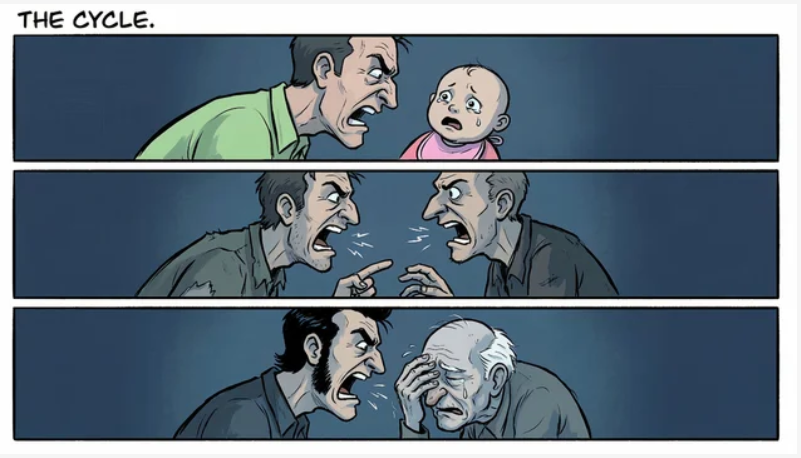
Trauma patterns form when overwhelming experiences don’t get processed. Instead of being felt and worked through, they get pushed down. Over time, those unprocessed emotions shape how caregivers relate, react, and cope. Children then learn these patterns without anyone ever explaining them.
This can look like:
Emotions being ignored or shut down
Anger being the only “allowed” feeling
Silence around painful events
A strong focus on survival instead of connection
None of this means your family failed. It means they were doing the best they could with what they had.
How Trauma Patterns Get Passed Down
Trauma moves through families in a few main ways: behavior, emotional responses, and the nervous system. Kids learn more from what they experience than from what they’re told.
For example, if a parent grew up in a home where emotions were unsafe, they may struggle to respond calmly to their child’s big feelings. That child then learns that emotions lead to tension, distance, or conflict. Over time, the pattern repeats.
Trauma can also be passed down through constant stress. Families who lived through poverty, war, racism, or ongoing instability often develop strong survival habits. These habits may have once been necessary, but later they can show up as anxiety, control, or emotional distance.
What’s important to know is this: trauma patterns are learned, and learned patterns can change.
What Trauma Patterns Look Like in Daily Family Life
Family trauma doesn’t always announce itself. It often shows up in everyday interactions that feel confusing or painful.
You might notice:
Overreactions to small conflicts
Avoidance of hard conversations
Difficulty trusting or relying on others
Roles like the “caretaker,” “peacemaker,” or “black sheep”
Big emotions followed by shame or silence
Some families bond through stress instead of safety. Others avoid conflict at all costs. Some swing between closeness and distance. These patterns aren’t random. They’re shaped by what the family nervous system learned long ago.
If you’ve ever felt like you’re playing a role you didn’t choose, that’s often a sign of a deeper pattern at work.
Emotional Regulation and Family Trauma
One of the biggest ways trauma patterns show up is through emotional regulation. If caregivers struggled to manage their own emotions, children often grow up without learning how to soothe themselves.
This can lead to:
Feeling overwhelmed by emotions
Shutting down during conflict
Exploding after holding things in too long
Feeling responsible for others’ feelings
These responses are not character flaws. They are nervous system responses shaped in relationships. Many adults blame themselves for these struggles without realizing they were never taught another way.
When families heal trauma, emotional regulation often improves across generations.
Why These Patterns Are Hard to See
Family trauma is hard to spot because it feels normal when you’re inside it. If everyone avoids feelings, you learn that avoidance is just how life works. If everyone yells, yelling feels normal.
There’s also loyalty. Many people feel guilty questioning family patterns, especially if caregivers sacrificed a lot. But understanding trauma isn’t about blame. It’s about context.
You can honor what your family survived while still choosing something different.
The Role of the Nervous System
Trauma patterns live in the nervous system, not just in memories. Families often share a baseline level of stress or alertness. This can look like always expecting something to go wrong or feeling uncomfortable when things are calm.
When a nervous system grows up in stress, it learns to stay on guard. That guard can show up as anxiety, control, withdrawal, or anger. Over time, these responses become familiar, even if they cause pain.
Healing starts when the nervous system learns that safety is possible in the present.
Breaking the Cycle Doesn’t Mean Cutting Ties
Many people worry that seeing family trauma means they have to walk away. That’s not always true. Breaking patterns is often an internal process before it’s an external one.
It can look like:
Pausing before reacting
Naming emotions instead of stuffing them
Setting small, clear boundaries
Choosing different responses with your own children or partners
Change can feel uncomfortable at first because it goes against what your body learned. That discomfort doesn’t mean you’re doing something wrong. It means you’re doing something new.
What Healing Can Look Like Over Time
Healing family trauma is not about becoming a perfect, calm person. It’s about having more choice. Over time, many people notice:
Less emotional overwhelm
More space between trigger and reaction
Clearer boundaries without guilt
A stronger sense of self
Research supports the idea that healing really does change over time, not just emotionally, but physically as well. In the 2023 Scientific Reports study “Physical Healing as a Function of Perceived Time” by Peter Aungle and Ellen Langer, participants’ wounds healed significantly faster when they experienced time as moving faster, even though the actual healing period was the same 28 minutes across all conditions. The findings suggest that the mind’s experience of time directly influences physical healing, reinforcing the idea that as our internal experience shifts, the body can respond in meaningful and measurable ways.
Healing also has ripple effects. When one person shifts, relationships often change. Sometimes that brings closeness. Sometimes it brings distance. Both can be part of growth.
You are allowed to grow even if others aren’t ready yet.
You’re Not Imagining This
If you’ve felt like something deeper is at play in your family, trust that instinct. Trauma patterns in families are real, common, and changeable. You don’t need every detail of the past to start healing. Awareness alone is powerful.
You’re not broken. Your family isn’t doomed. And this doesn’t have to continue forever.
A Gentle Invitation
Understanding generational trauma can be the first step toward breaking cycles that were never yours to carry.
If you’re beginning to explore how trauma has shaped your family dynamics, the Somatic Journal can help you gently reconnect with your nervous system and process these patterns with compassion.
If you’re starting to see how trauma patterns show up in your family and in your own life, you don’t have to figure this out alone. As a relational trauma therapist, I support people in understanding their family patterns, calming their nervous systems, and building healthier ways of relating.
This work is slow, kind, and deeply human. And it’s possible.
If this resonates, I’d love to support you. Reach out when you’re ready.
FAQs
1. How do I know if my family has generational trauma?
You may notice repeated patterns like emotional distance, high conflict, addiction, anxiety, or silence around painful events. If the same struggles show up across generations, it can be a sign of generational trauma.
2. What are signs of family trauma?
Signs include difficulty talking about feelings, strong reactions to stress, rigid family roles, lack of emotional safety, or patterns of control, avoidance, or caretaking.
3. What are the 5 F’s of trauma responses?
The five common trauma responses are fight, flight, freeze, fawn, and flop. These are automatic ways the nervous system tries to stay safe under stress.
4. Do your genes carry your family’s past trauma?
Research suggests trauma can affect how genes are expressed, especially related to stress. This doesn’t mean trauma is destiny, but it can influence sensitivity and stress responses.
5. What are examples of generational trauma?
Examples include families affected by abuse, neglect, war, displacement, racism, addiction, or chronic poverty, where emotional pain and survival patterns pass from one generation to the next.