Attachment Styles and Trauma: Understanding Your Relationship Patterns
If you've ever wondered why you pull away when someone gets too close, or why you cling a little too tightly when you're scared of losing someone, you're not alone. I've been there myself, and so have many of the people I work with. One of the most powerful things I help clients explore is the connection between attachment styles and trauma because understanding this can change everything about how you show up in relationships.
Maybe you’ve heard terms like “anxious attachment” or “avoidant partner” before. Maybe you’ve read about attachment theory in passing. But what I want to do today is bring it down to earth no jargon, no blame, just honest, human insight into why we love the way we do, and how past pain plays a part.
This isn’t about fixing yourself. This is about getting to know yourself with more compassion.
Why Attachment Matters in Relationships
Attachment is all about connection.
We’re wired from birth to connect with others; it's how we survive. As babies, we depend completely on our caregivers to meet our needs, and the way they show up (or don’t) sets the stage for how we connect with others later in life.
If your needs were met consistently, you likely developed what we call a secure attachment, meaning relationships generally feel safe and stable. But if your caregivers were emotionally distant, unpredictable, or even unsafe, your attachment system may have learned to adapt in ways that now show up as anxiety, avoidance, or fear in your adult relationships.
The Four Main Attachment Styles
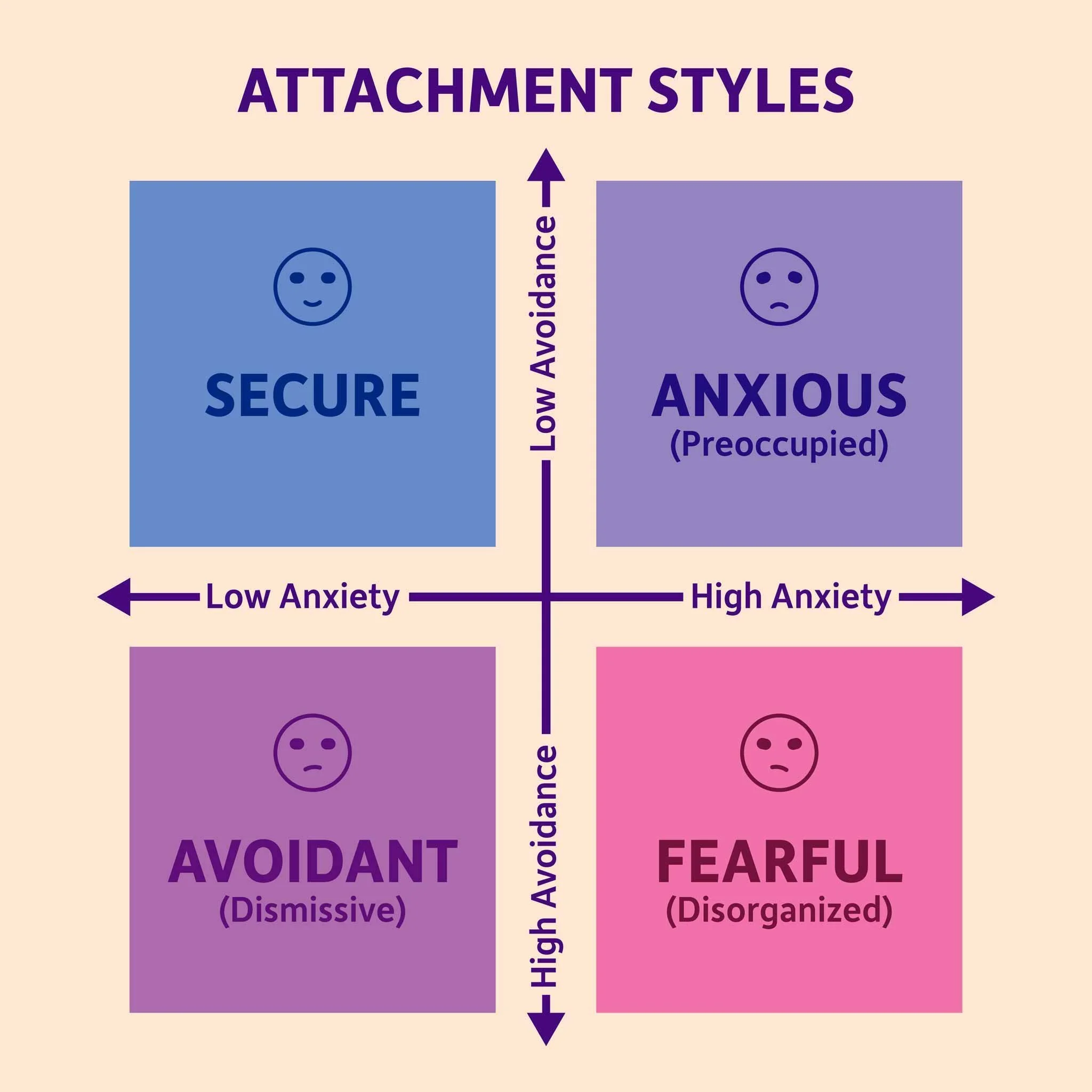
Let’s break them down in a simple, relatable way.
1. Secure Attachment
You feel comfortable with closeness and independence. You trust your partner and yourself. You can talk through issues without feeling overwhelmed.
2. Anxious Attachment
You crave closeness but often fear being abandoned. You might overthink texts, worry they don’t love you, or try to “fix” things constantly. Your nervous system feels on edge in relationships.
3. Avoidant Attachment
You value independence and often feel suffocated by too much closeness. You might pull away when things get too emotional or feel safer alone. Vulnerability can feel like a threat.
4. Disorganized (or Fearful-Avoidant) Attachment
You want a connection but fear it at the same time. This often comes from trauma, especially in early relationships where love was mixed with fear. You may bounce between clinging and pushing away.
Attachment Styles and Trauma: What’s the Link?
This is where things get really important.
Attachment styles and trauma are deeply connected. If you experienced emotional neglect, physical abuse, abandonment, or even subtle emotional misattunement growing up, it makes sense that your brain and body learned to adapt to stay safe.
Let me say this clearly: your attachment style is not a flaw. It's an adaptation. It was your nervous system doing its best with what it had.
But what helped you survive back then might be hurting your relationships now. That anxious panic when someone pulls away? That wall you throw up when someone gets too close? That’s your body remembering what it was like to feel unsafe in connection.
This connection between attachment styles and trauma isn’t just something we “feel” in relationships; it’s also strongly supported by psychological research and clinical education. In HelpGuide.org’s web article “Attachment Styles: How They Affect Adult Relationships,” Lawrence Robinson, Jeanne Segal, Ph.D., and Jaelline Jaffe, Ph.D. explain that the bond we form with a primary caregiver in infancy helps shape how we handle closeness, trust, and conflict later in life, and that insecure attachment patterns often develop when early caregiving was inconsistent, rejecting, frightening, or unsafe. The article also breaks attachment into four main styles: secure, anxious, avoidant-dismissive, and disorganized/fearful-avoidant, and emphasizes that these patterns aren’t permanent: with awareness, emotional regulation, communication, and trauma healing, people can gradually move toward more secure attachment over time.
What Trauma Teaches You About Love
If you grew up with trauma, your earliest lessons about love might’ve sounded like:
“Love means I have to earn attention.”
“If I get too close, I’ll get hurt.”
“If I express my needs, I’ll be rejected.”
“People leave.”
Even if you’re in a healthy relationship now, those old messages can sneak in. You might interpret neutral moments (like a late reply or quiet tone) as rejection or danger. You might sabotage closeness before someone else can leave.
This isn’t you being dramatic. It’s trauma. And it’s possible to unlearn it.
Can Attachment Styles Change Over Time?
Yes. 100% yes.
Just like we learn patterns, we can relearn safer ones. I’ve seen anxious clients grow into confident, grounded partners. I’ve seen avoidant clients learn how to stay open and present during conflict. I’ve seen people with disorganized styles build secure relationships where they once believed it wasn’t possible.
The key is awareness, safety, and consistent emotional repair. Whether you’re doing that work in therapy, with a partner, or even through self-reflection, change is always on the table.
It takes time, but so does anything worth healing.
How to Start Healing Your Attachment Wounds
If you're wondering, “Where do I even begin?”, you’re not alone. Here’s how I guide clients through this work in a way that’s gentle and doable.
1. Learn Your Pattern
Start by getting clear on your attachment style. This helps you name what’s happening in the moment instead of getting lost in shame.
Ask yourself:
Do I fear people leaving?
Do I avoid emotional conversations?
Do I flip between needing closeness and pushing it away?
This self-awareness is powerful. Not for labeling yourself but for understanding yourself.
2. Regulate Your Nervous System
When attachment wounds get triggered, your body reacts fast. You might feel your chest tighten, your stomach drop, or your thoughts race.
Simple ways to soothe:
Breathe slowly, long exhales help calm panic.
Name what you're feeling: “This is anxiety, not abandonment.”
Move your body, shake, stretch, walk.
Use grounding tools (cold water, textures, touch).
You can’t connect from a place of panic. Calming your body gives you more space to respond instead of react.
3. Practice Boundaries and Vulnerability
This part is tricky but powerful. Boundaries keep you safe. Vulnerability keeps you connected. You need both.
For anxious styles: Try pausing before sending that second or third message. Ask yourself what you need and if it’s okay to wait.
For avoidant styles: Practice staying in hard conversations a few minutes longer. Say something small and honest like, “I need a minute, but I don’t want to shut you out.”
For disorganized styles: Acknowledge both parts, the one that wants to run, and the one that wants to stay. It’s okay to have mixed feelings. Safety helps you sort them out.
The Role of Safe Relationships in Healing

Healing doesn’t happen in isolation.
We’re hurt in relationships, and we heal in them too. That doesn’t mean you need a perfect partner. But it does mean you deserve to feel emotionally safe with someone who listens, respects your boundaries, and shows up consistently.
You Are Not Too Much. You Are Not Broken.
If attachment trauma has left you feeling unlovable, needy, or distant, please hear this: you are allowed to need connection. You are allowed to protect yourself. And you are capable of healing.
Attachment styles and trauma don’t define who you are. They explain how you’ve adapted — not who you’re meant to stay.
You can build secure, stable relationships even if you’ve never had one before. And that work starts with understanding yourself, holding compassion for your past, and slowly reconnecting with your own needs and voice.
If you’re beginning to notice these patterns in your own relationships, the Self-Confidence Journal is a free guided resource designed to help you rebuild self-trust, reconnect with your identity, and strengthen your inner voice after relational trauma.
Inside, you’ll find reflection prompts and grounding practices to help you start creating a sense of safety within yourself, which is where secure attachment begins.
And if you’re looking for deeper support as you move through this work, you’re always welcome inside the Trauma Healing Membership, where we explore attachment, boundaries, and emotional safety together in a supportive community.
You deserve connection that feels safe. You deserve relationships that don’t leave you guessing.
And that healing is possible.
FAQs
1. What are attachment styles, and how do they develop?
Attachment styles are emotional bonding patterns formed in early relationships that influence how we connect with others as adults.
2. How does trauma influence attachment styles in relationships?
Trauma can disrupt secure attachment, leading to fear of abandonment, emotional distance, or difficulty trusting others.
3. Can trauma change your attachment style later in life?
Yes. Trauma in adulthood can shift how someone responds to intimacy, safety, and emotional connection.
4. How can I tell which attachment style I have?
By noticing relationship patterns around closeness, conflict, and trust, or through assessments and therapy.
5. Is it possible to heal trauma and develop secure attachment?
Yes. With awareness and trauma-informed support, attachment patterns can become more secure over time.